
You Don’t Like Protocols? Then You May Not Understand How Healthcare Works.
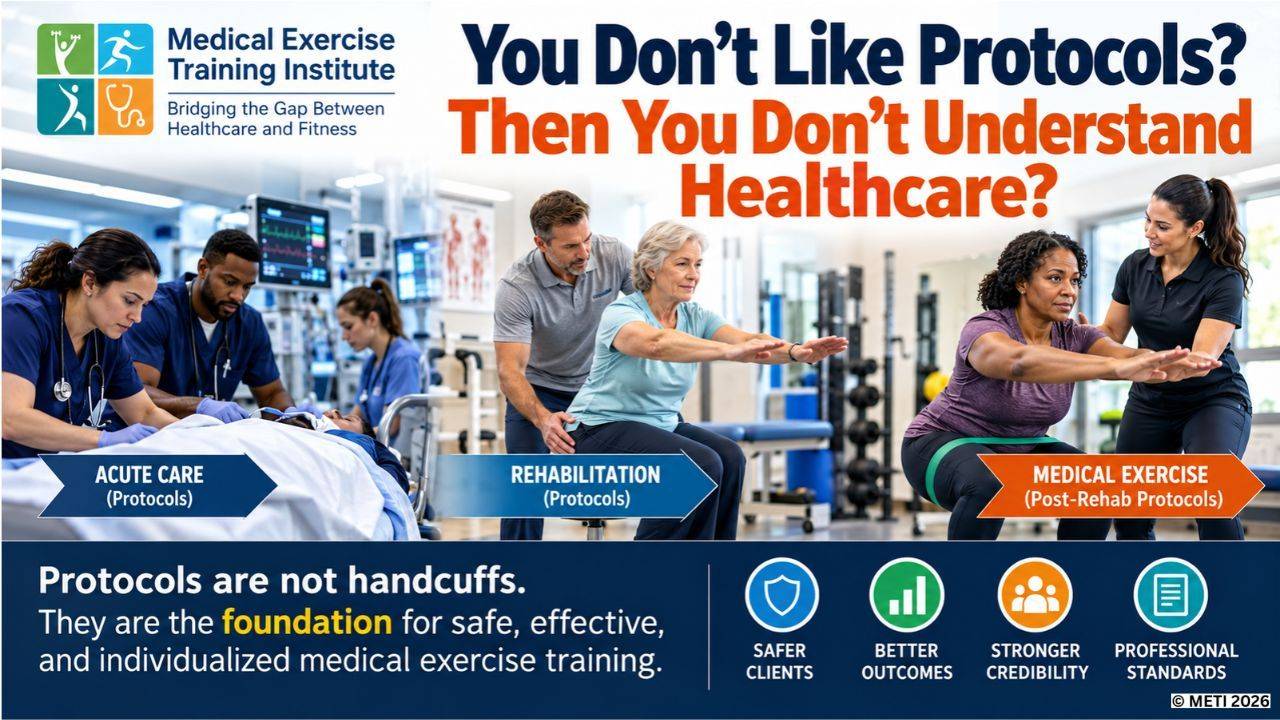
Why Medical Exercise Protocols Are Not Restrictions on Professional Judgment, but the Foundation for Developing It?
An Evening Watching Television Taught Me Something About Medical Exercise Training
Recently, I was home one evening watching television. I've become a fan of the medical drama The Pitt. As I sat there watching the emergency room physicians, nurses, and technicians managing one medical crisis after another, I received an email from one of our Medical Exercise Specialist students.
The student was questioning why they should consider using our post-rehab protocols. Why should they follow a protocol when they could develop their own exercises and individualize their client's program?
I had to laugh a little.
Not because the question was inappropriate. Actually, it was a very good question. But as I turned my attention back to the television, something struck me.
Almost everything I was watching those fictional healthcare professionals do was based on a protocol.
The ph...
The MedExPRO Periodic Table - The Elements of a Successful Practice
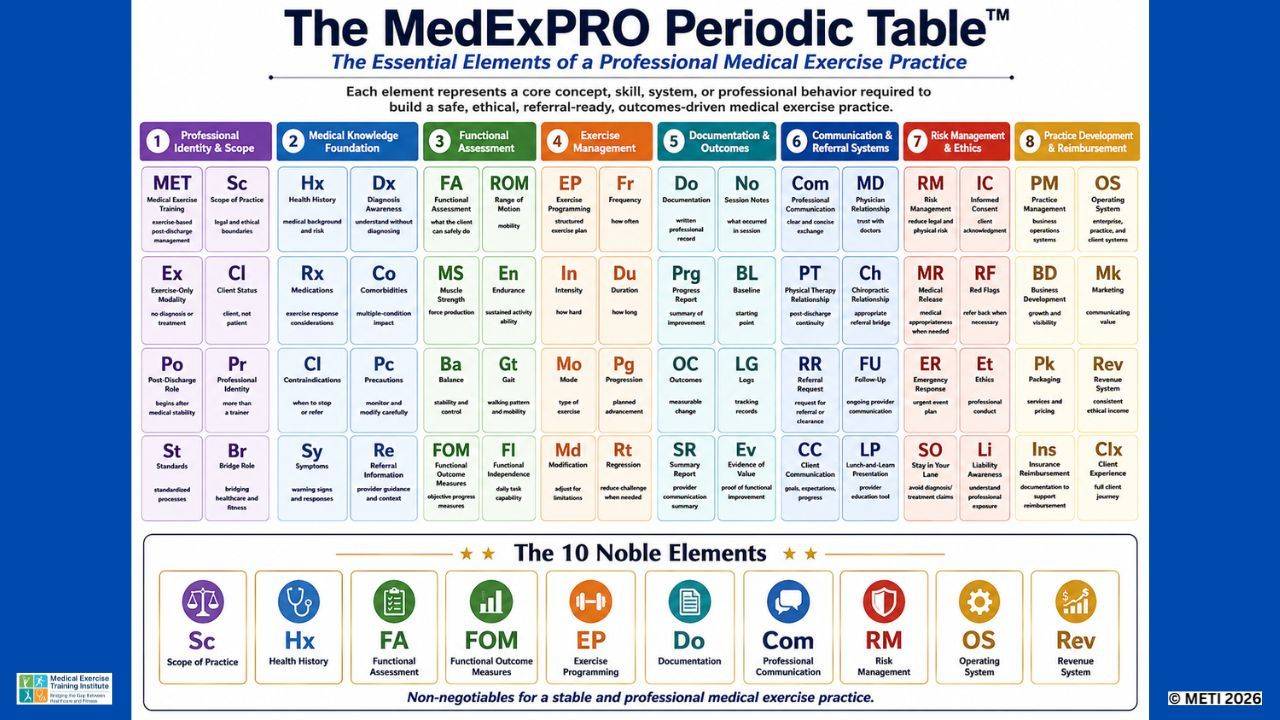
The MedExPRO Periodic Table™: The Essential Elements of a Professional Medical Exercise Practice
The fitness industry has spent decades attempting to step closer to healthcare. Personal trainers and fitness instructors routinely employ terms like "corrective exercise," "post-rehab," "medical fitness," "functional training," and "therapeutic exercise." While some of these concepts possess inherent value, their loose application often generates more confusion than clarity. If we expect physicians, physical therapists, chiropractors, senior living administrators, and insurance carriers to take our work seriously, Medical Exercise Training (MET) must be fundamentally different. We must define our role, establish clear professional boundaries, and show how assessment, programming, documentation, and business operations work together in a structured, repeatable system.
For the Medical Exercise Professional (MedExPRO) working with clients with medical conditions, professionalism is not buil...