
MedExPRO - Neck Pain Isn’t Just Pain—It’s Lost Function—Can You Measure Functional Improvement
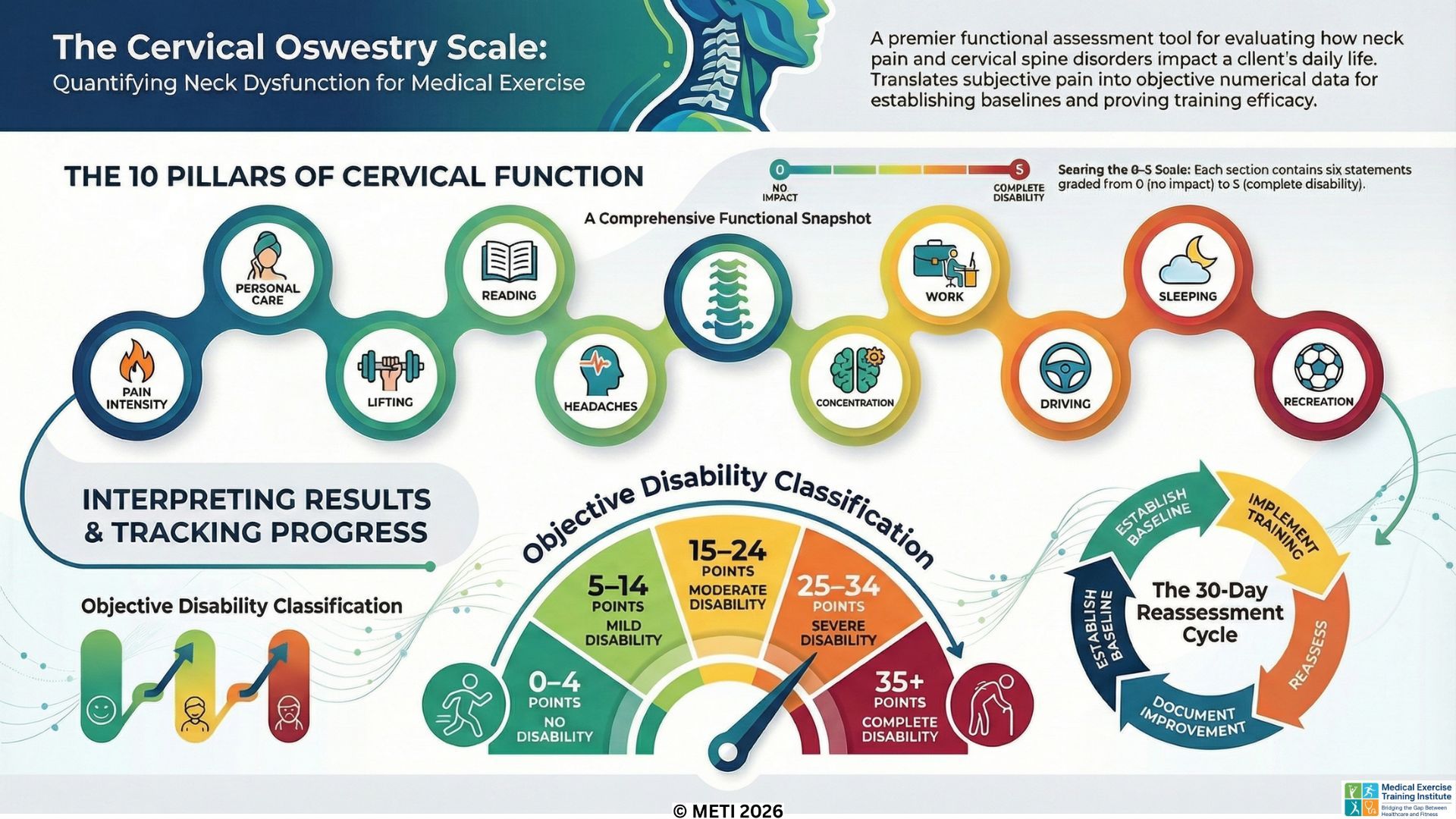
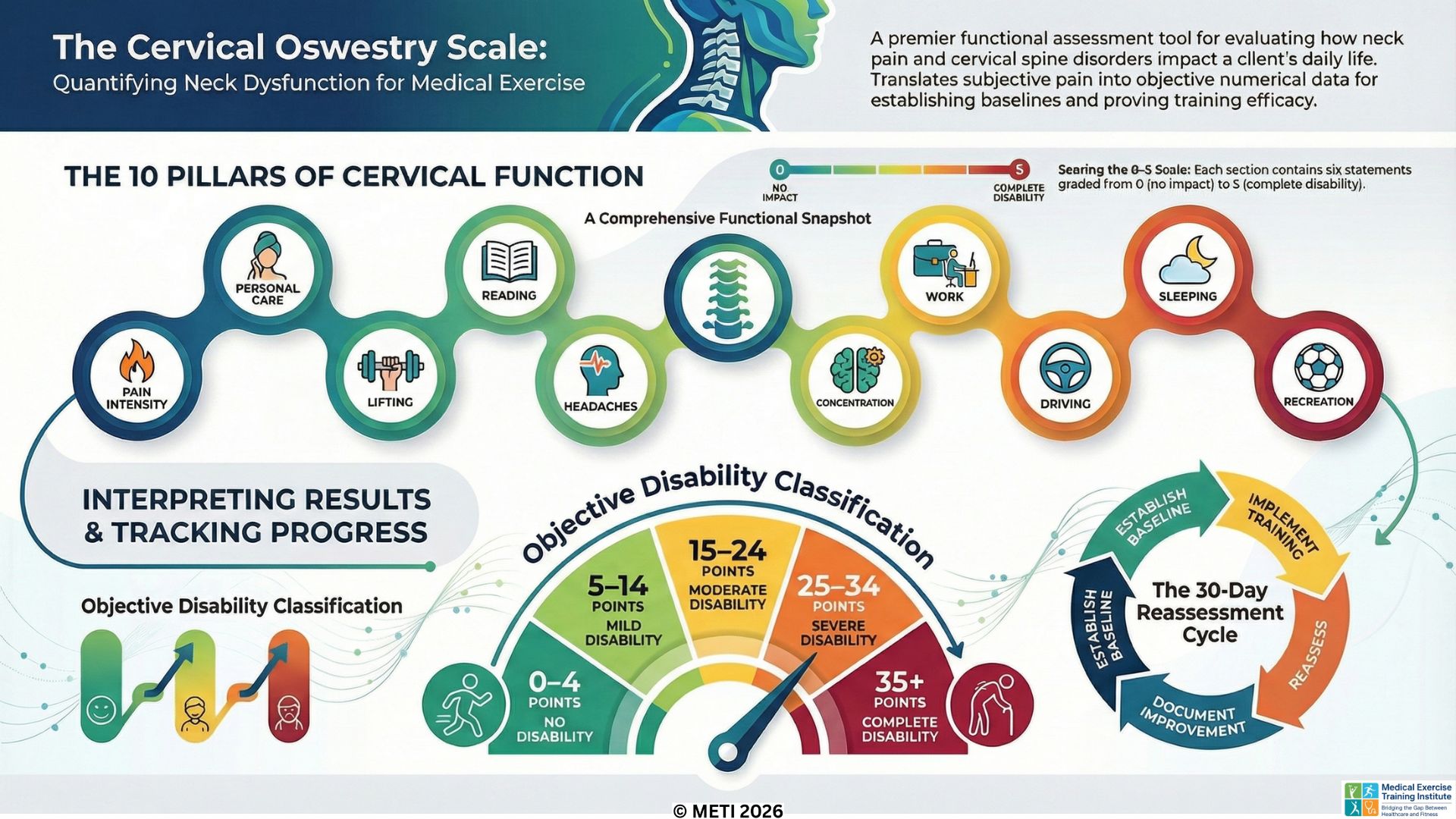
The Cervical Oswestry Scale: Measuring the True Cost of Neck Dysfunction
Just as the Lumbar Oswestry Scale measures lower back dysfunction, the Cervical Oswestry Functional Assessment Scale is the premier tool for evaluating clients with cervical spine disorders. Also developed by Dr. Gordon Waddell, this questionnaire-based scale takes a comprehensive "snapshot" of how neck pain, stiffness, and cervical limitations impact a client's overall lifestyle and daily activities. For Medical Exercise Professionals (MedXPROs) managing conditions like cervical strain or disc herniations, this tool is vital for setting baselines and proving program efficacy.
Get the Podcast Here
The Cervical Oswestry Scale consists of 10 specific sections, each containing six statements graded from 0 to 5. The sections cover Pain Intensity, Personal Care, Lifting, Reading, Headaches, Concentration, Work, Driving, Sleeping, and Recreation. This scale is uniquely tailored to the symptoms most frequently assoc...
Medical Exercise Specialist Snapshot of Lumbar Function
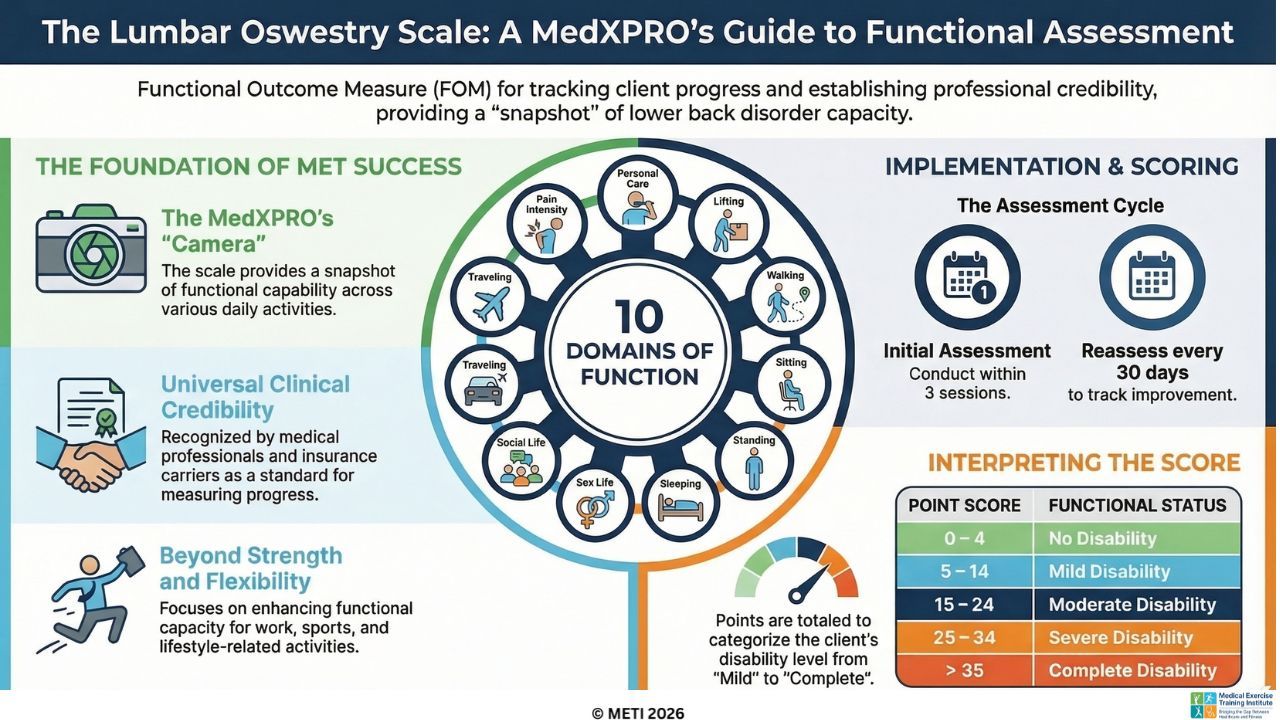
For Medical Exercise Professionals (MedXPROs) managing clients with low back pain and lumbar spine disorders, the Oswestry Lumbar Scale is an indispensable functional assessment tool. Developed by Scottish industrial rehabilitation physician Gordon Waddell, this scale translates the subjective experience of back pain into a concrete, objective numerical value. Rather than merely testing a client's lumbar range of motion or isolated muscle strength, the Oswestry Scale uses a battery of targeted questions to determine exactly how a lumbar condition impacts a client's daily functional capacity.
The Lumbar Oswestry Scale is divided into 10 distinct sections, each addressing a critical aspect of daily living. These sections include Pain Intensity, Personal Care (such as washing and dressing), Lifting, Walking, Sitting, Standing, Sleeping, Sex Life, Social Life, and Traveling. Within each section, the client selects from six statements that best describe their current level of function or l...
Medical Exercise Training Ultimate Fall Risk Assessment - Tinetti Balance/Gait Scale
Get the Podcast Here
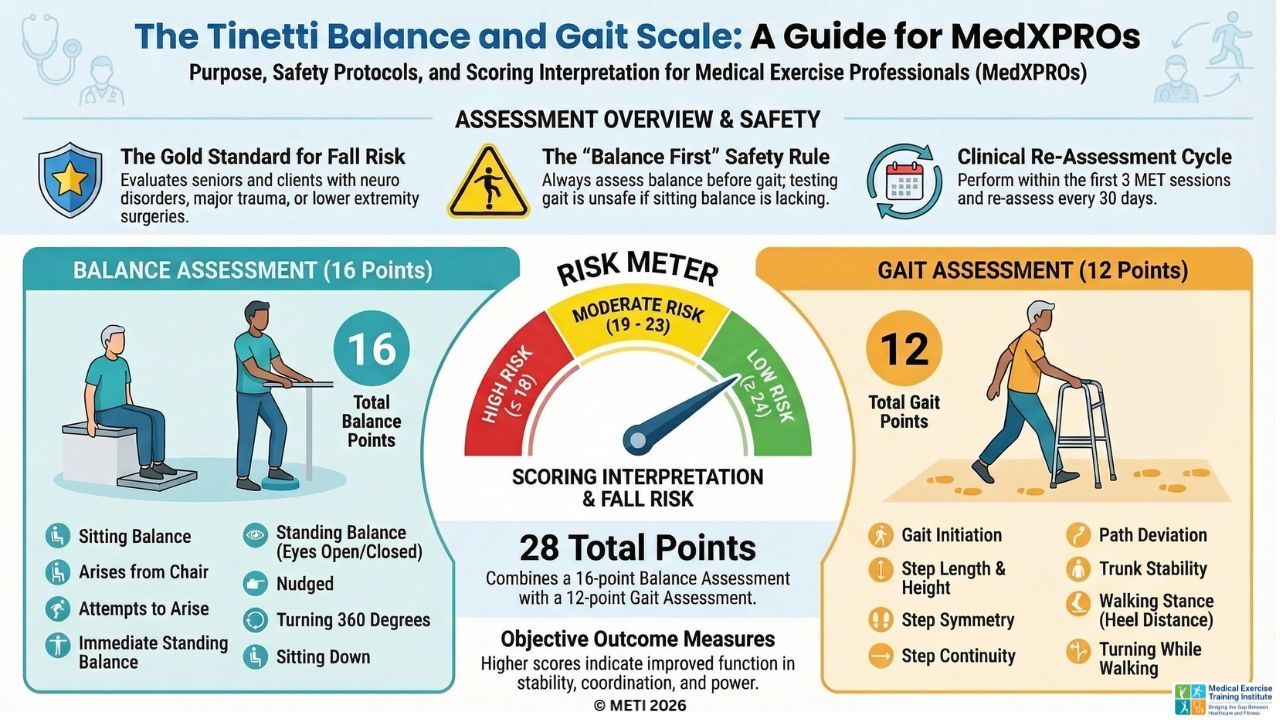
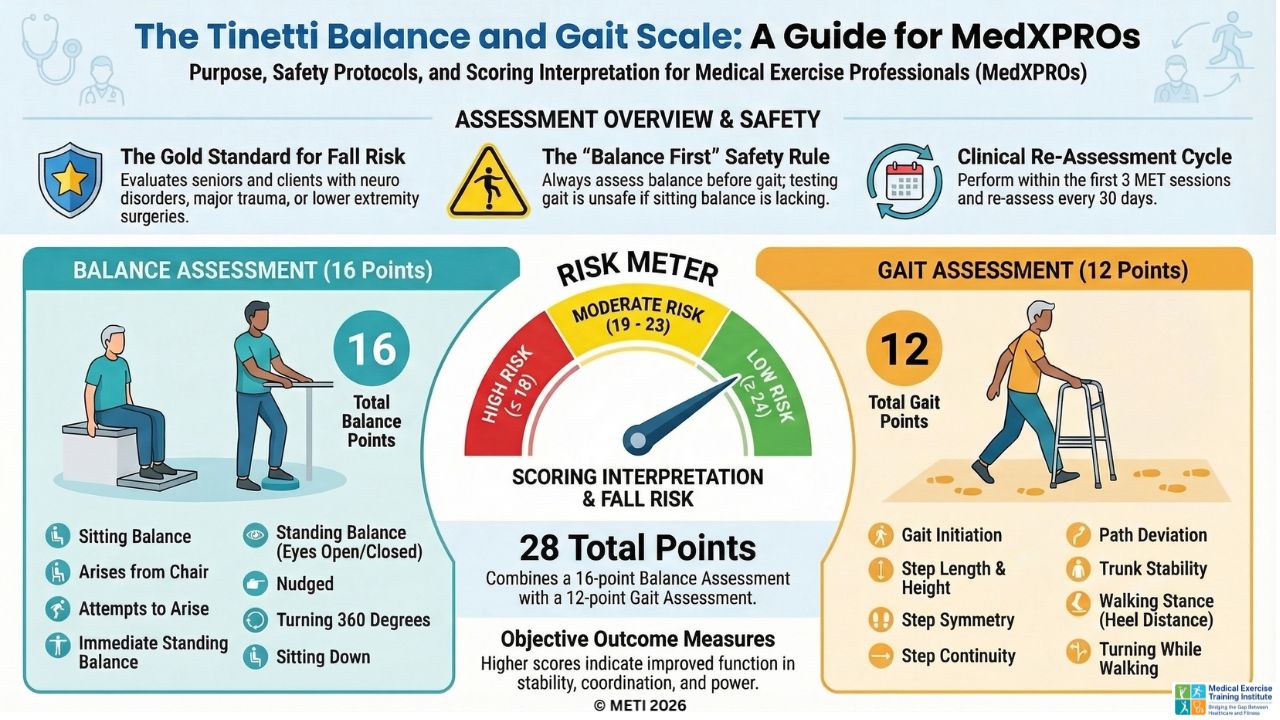
The Tinetti Gait and Balance Scale is one of the most frequently used and critical functional assessment tools for Medical Exercise Professionals (MedXPROs) working with aging populations and those with neurological challenges. Specifically, this scale is ideal for seniors, clients utilizing an ambulatory assistive device, or individuals with a history of a cerebrovascular accident (CVA/stroke), Multiple Sclerosis, Parkinson’s disease, lower extremity surgery, or major trauma. Rather than just evaluating isolated strength, the Tinetti Scale provides a comprehensive snapshot of how a client's body functions in motion and at rest, accurately determining their precise risk for falls.
This objective assessment is divided into two distinct components: Balance and Gait, yielding a maximum combined score of 28 points. The Balance assessment must always be performed first; if a client lacks independent sitting balance, progressing to gait testing may be highly unsafe.
...MET 101 eBook Tip 50 - The Ultimate Guardrail - Why MET Criteria Are for Safety
Why MET Criteria Are for Safety, Not Management
Welcome to a milestone in our MET 101 series! In Tip 50, Dr. Mike tackles a highly anticipated follow-up question regarding Medical Exercise (ME) criteria: How will the MET criteria help me manage my clients?
The answer might surprise you: The criteria will not help you manage the client through the MET program.
Instead, Dr. Mike emphasizes that the criteria are fundamentally a safety tool, rather than a management tool. Their primary purpose is to act as a strict guardrail designed to prevent medically unstable clients from entering an ME program. If a client requires the medical stabilization skills of a physician, nurse, or physician's assistant, working with them falls far outside a MedExPRO's scope of practice and ethical range. Adhering to these criteria ensures you have the greatest opportunity to produce a positive functional outcome, while simultaneously keeping you out of "hot water" and professional liability.

A Crucial N...
The Future of Medical Exercise: Why Functional Assessment Scales Are the Ultimate Game Changer
Get the podcast here
For the last thirty plus years I have learned a simple but uncomfortable truth about medical exercise.
Most fitness professionals measure the wrong things.
They measure strength, flexibility, and endurance in isolation. They celebrate improvements in numbers that mean something inside the fitness industry but mean very little inside the healthcare system.
A physician does not care that your client improved their squat by 25 pounds.
A physician cares whether that person can safely climb stairs, walk without falling, return to work, or maintain independence.
This is the fundamental shift that is now occurring in the evolution of medical exercise training.
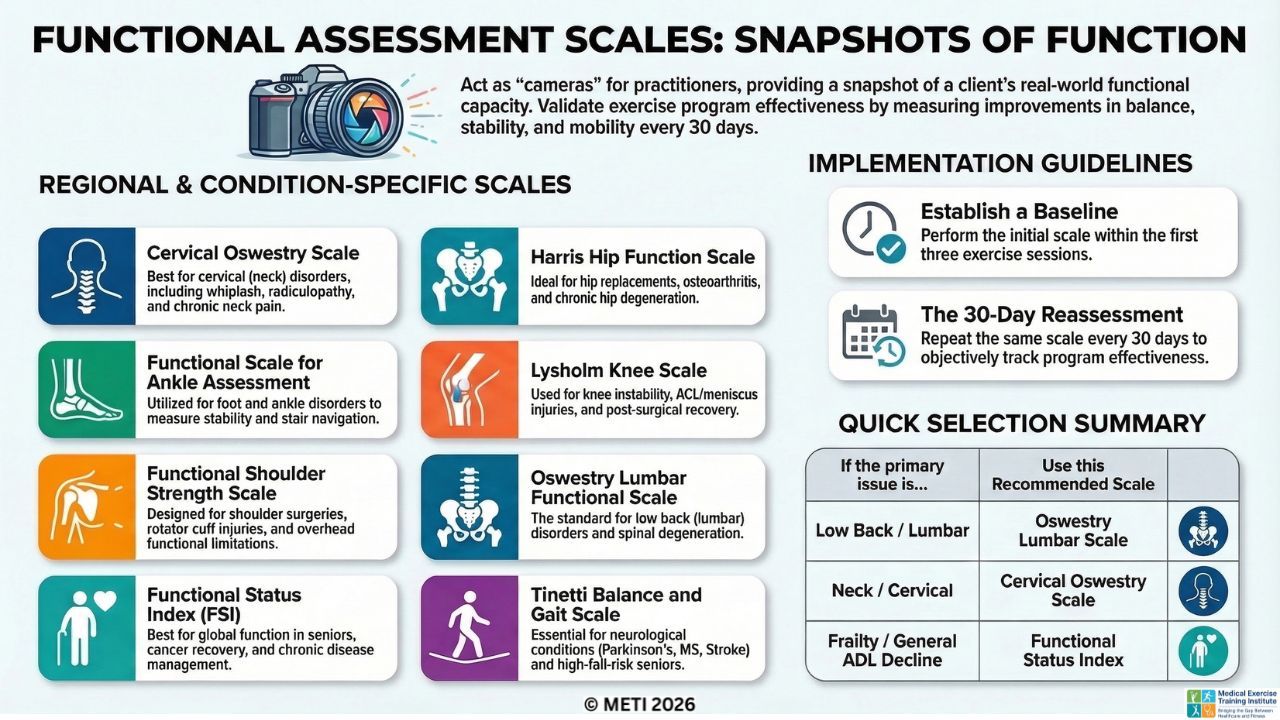
The future of the profession will be built not on exercises — but on measured improvements in functional capacity.
And the tool that will define this transition is the Functional Assessment Scale (FAS).
The Coming Transformation in Medical Exercise
The healthcare system is under extraordinary pressure.
...Cash First Reimbursement Model Webinar - Thursday, March 19th @ 2PM ET

If you want more referrals, your practice must feel easier to trust for physicians.
That trust does not come from enthusiasm alone.
It comes from systems.
When a physician, chiropractor, case manager, or discharge planner looks at your practice, they are not just asking whether you care.
They are asking whether you are organized.
Whether your documentation is professional.
Whether your process makes sense.
Whether the client has a clear path forward.
This is where the Cash First Reimbursement Model becomes a major advantage.
When you incorporate this model into your practice, you are no longer saying:
“We don’t really deal with reimbursement.”
Instead, you are saying:
“We have a structured process. The client pays at the time of service, and we provide the documentation necessary to support reimbursement efforts.”
That is a stronger message.
A more professional message.
And in many cases, a more referable message.
Join me for this important webinar and learn how to build this...
MET 101 Tip 49: Protect Your Practice and Clients Using MET Criteria
In Tip 49 of our MET 101 series, Dr. Mike discusses one of the most vital safeguards for any Medical Exercise Professional (MedExPRO): the Medical Exercise (ME) criteria. Created in collaboration with physical therapist Dr. Jeffrey Wright, these criteria are strictly designed to ensure that MedExPROs are never put in danger by working with an inappropriate client.
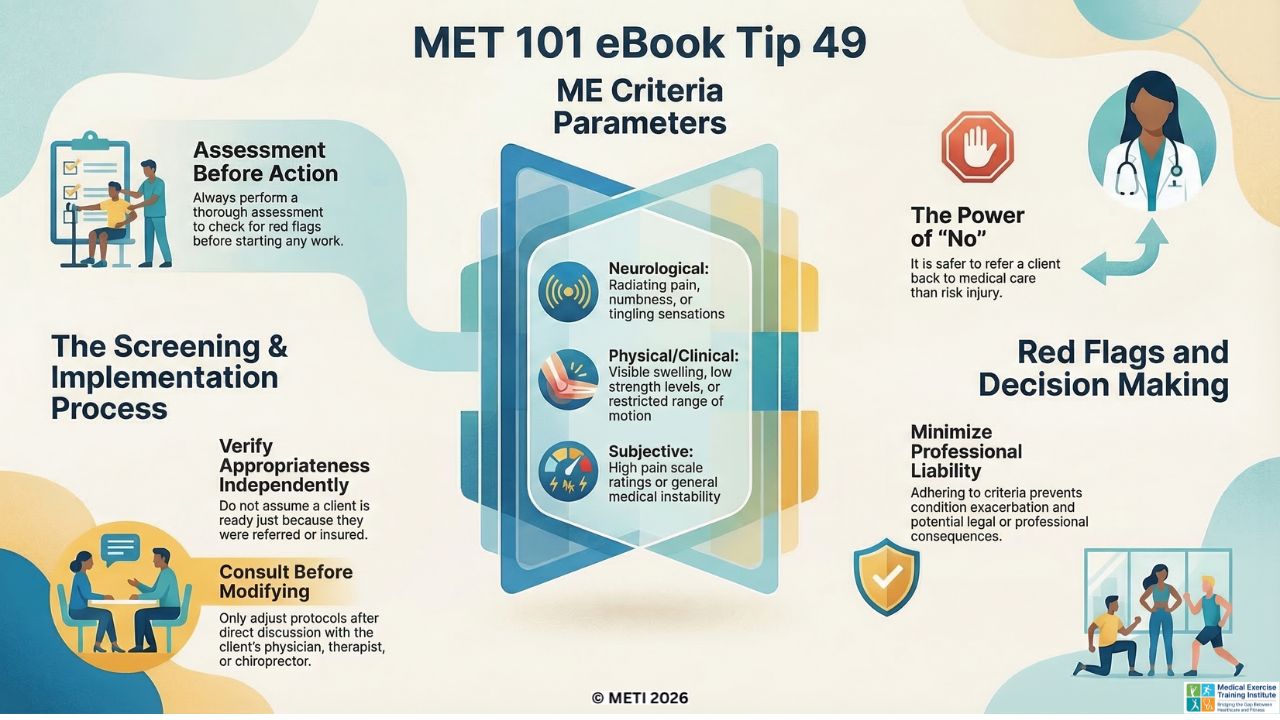
Not Every Client is Ready for Medical Exercise: It is a critical reality that just because a client is referred by a doctor, therapist, or chiropractor—or even if they self-refer because their insurance ran out or they disliked their therapist—it does not automatically mean they are medically appropriate for your services. According to the sources, even licensed physical therapists frequently receive physician referrals for patients who actually need more intensive medical or nursing care to become stable enough to tolerate therapy. As a MedExPRO, you must be equally diligent by performing thorough initial assessments to e...
“PT” Has Different Meanings in Different Settings
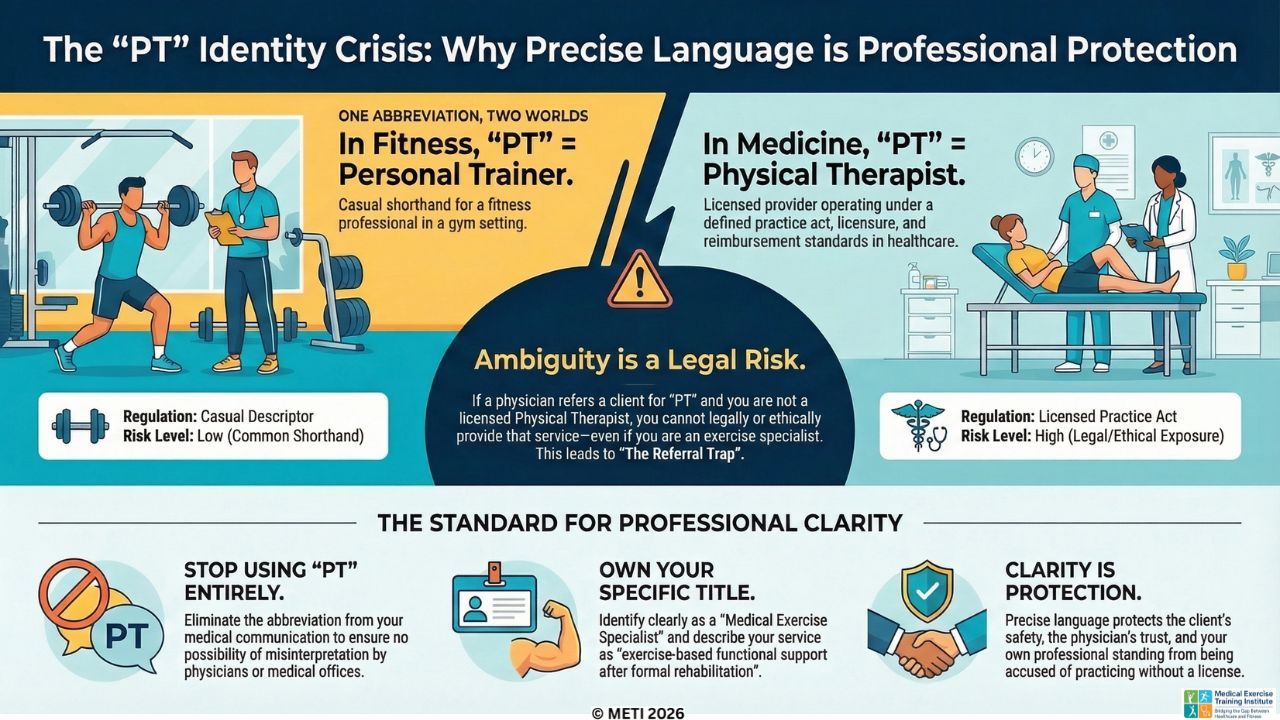
When the Medical Community Hears “PT”—It’s Not “Personal Trainer”
Why Medical Exercise Professionals Must Speak Clearly Before They Step Into Medical Communication
As Medical Exercise Professionals move closer to the healthcare system, one truth becomes increasingly important….
Language Matters.
And sometimes, one small abbreviation can create a very big problem.
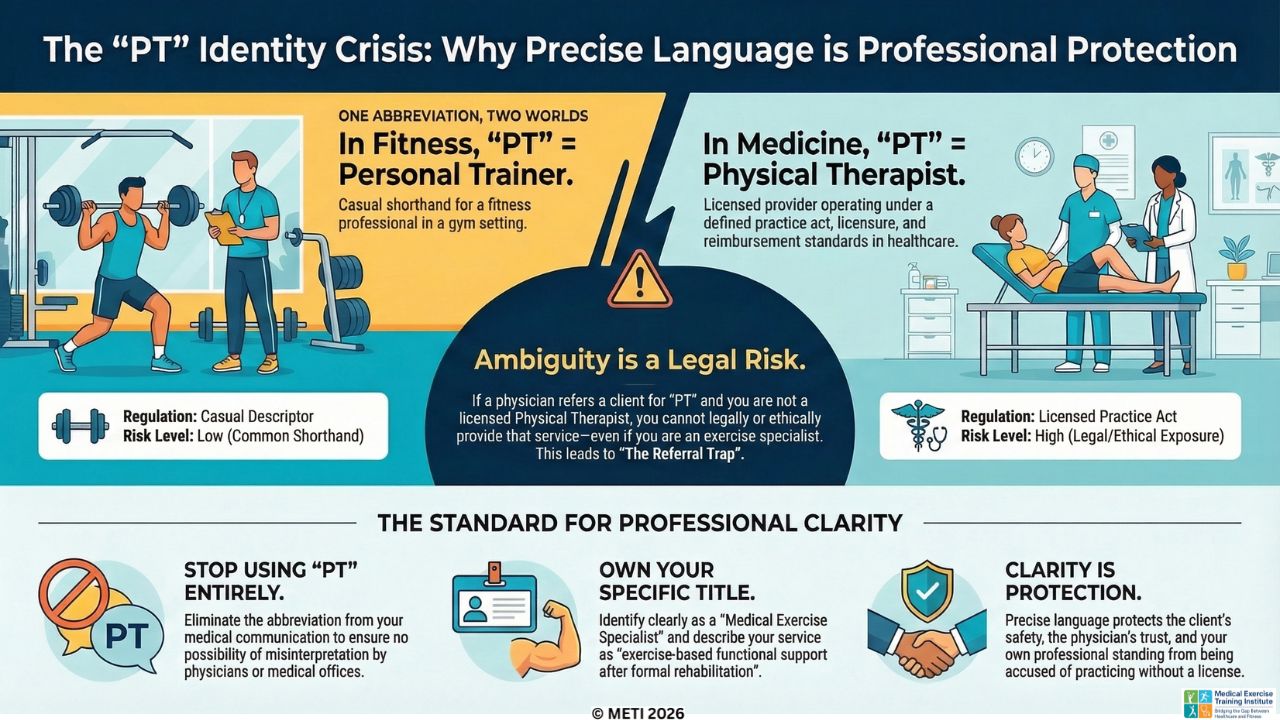
Recently, we encountered a situation in which a Medical Exercise Specialist contacted a physician to obtain a referral for medical exercise training services. The physician wrote the referral for physical therapy services. The Medical Exercise Professional continued working with the client anyway, while attempting to get the wording corrected later.
That is not a minor paperwork issue.
That is a professional, ethical, and potentially legal problem.
The root of the confusion came down to a simple abbreviation: PT.
In the fitness world, some people may casually use “PT” to mean personal trainer. But inside the medical...
Medical Exercise Assessment Step 4: Musculoskeletal/Neuromuscular Evaluation
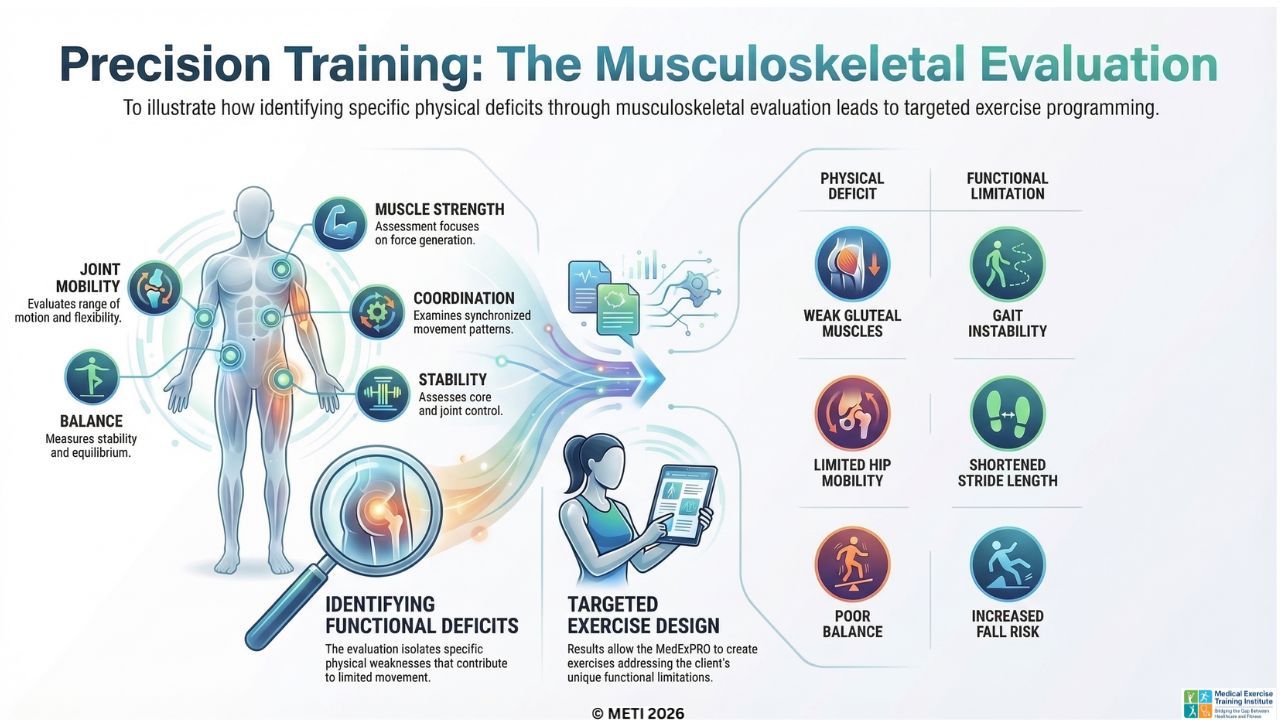
As a Medical Exercise Professional (MedExPRO), your assessment process is the foundation of a successful client program. After completing your pre-assessment preparation, initial observation, and functional interview, it is time to move on to step four of the seven-step medical exercise assessment series: the Musculoskeletal and Neuromuscular Evaluation.
Transitioning to Formal Testing According to Dr. Mike, originator of the Medical Exercise Specialist Certification, step four is where the formal testing begins. Based on the specific condition of your client, you will identify which region of the body is affected—whether that is a hip issue, a knee issue, or a shoulder issue.
Once the region is identified, you will take your assessment forms and apply the appropriate regional assessment procedures. This phase evaluates key physical components, including:
- Strength
- Range of motion
- Balance
- Coordination
- Stability
- Endurance
The Goal: Functional Deficits, Not Clinical Diagnoses...
Medical Exercise Assessment - Step 3 Functional Interview

The Functional Interview — Understanding the Client’s Real Goals
A structured conversation is a critical part of the assessment process.
Medical Exercise Training is not about isolated muscle strength.
It is about improving the client’s ability to live independently.
The functional interview helps identify:
- activities the client struggles with
• activities the client has stopped doing
• activities the client hopes to regain
For example, a client may say:
“I want to be able to walk to the mailbox.”
Or
“I want to be able to play with my grandchildren.”
These statements reveal meaningful functional goals.
Once those goals are identified, the exercise program can be designed to support them.