
Stop Guessing, Start Tracking: Systematizing Assessments for Medical Exercise Referrals
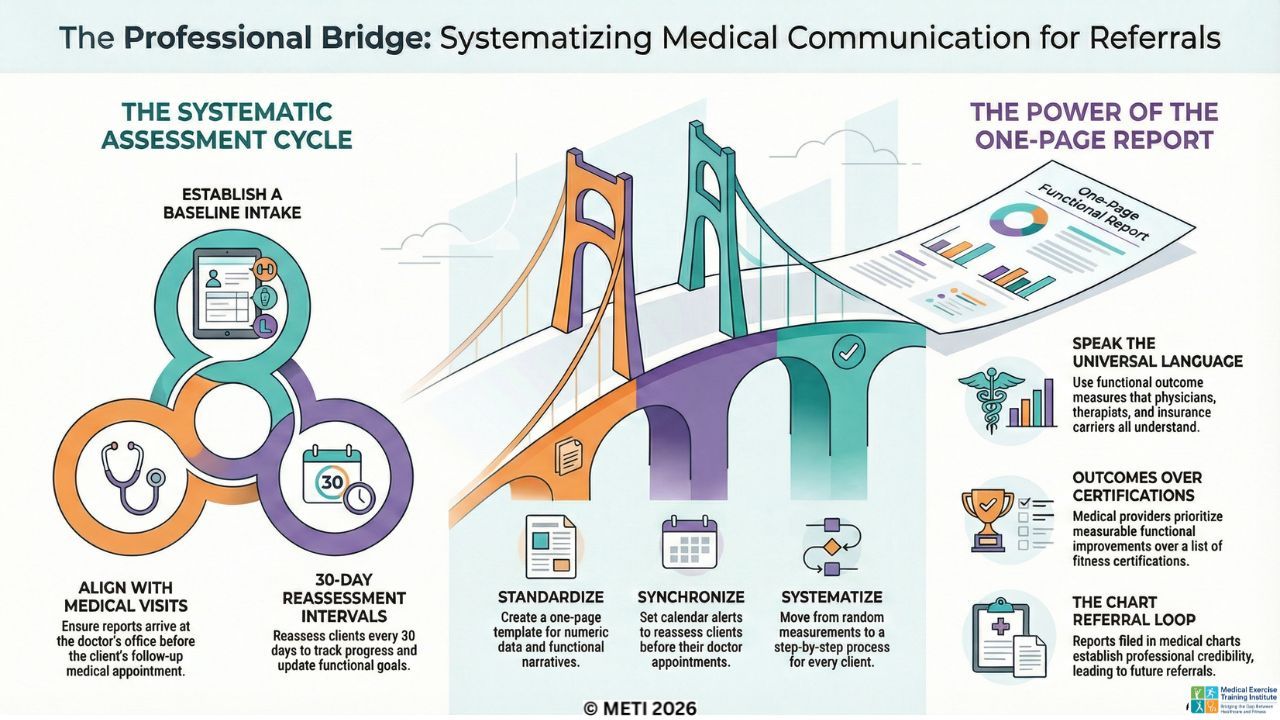
If you want to build a thriving medical exercise practice, you might think the secret lies in collecting more fitness certifications to impress local doctors. But here is the hard truth: most medical professionals do not know what your certifications mean, and honestly, they do not care.
What doctors, therapists, and chiropractors actually care about are positive functional outcomes. They want to know that if they send a patient to you, that patient will safely improve. To prove this, you must stop guessing and start tracking by systematizing your assessment and communication processes.
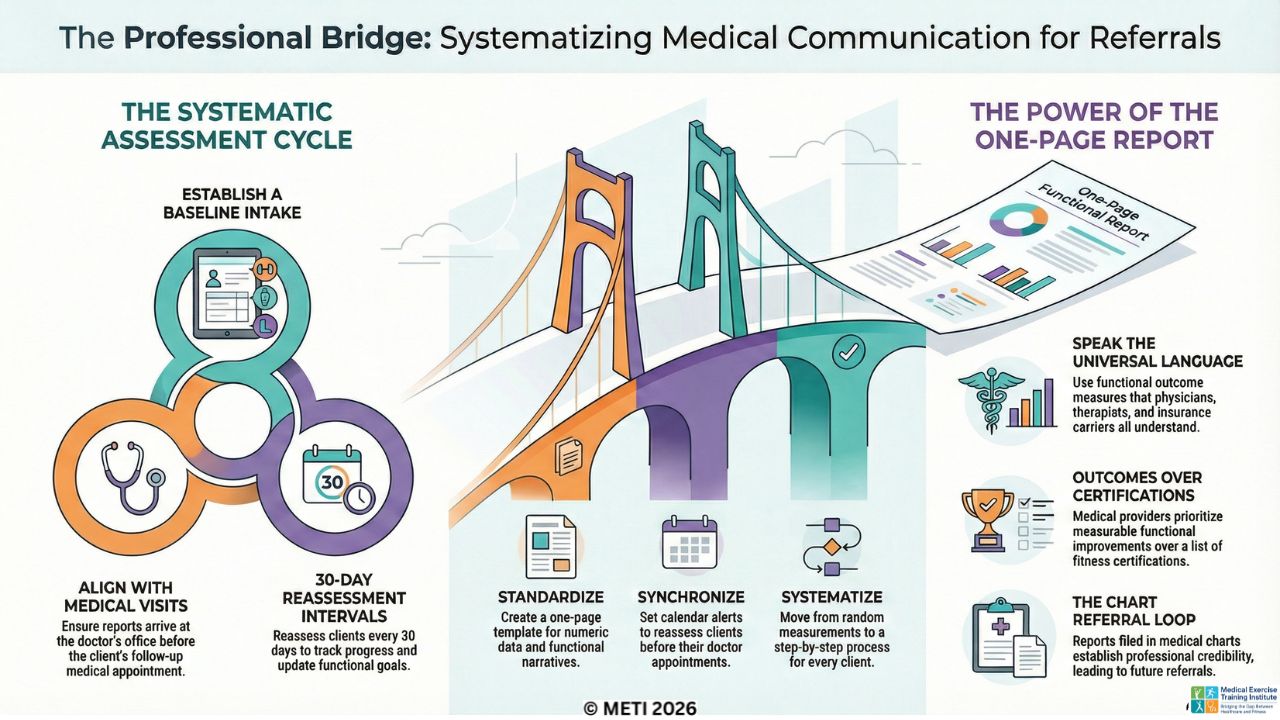
The Power of the One-Page Progress Report Dr. Michael Jones frequently shares a story from his time owning physical therapy clinics. A young personal trainer started working with one of his recently discharged patients. A few weeks later, Dr. Jones received a simple, one-page progress report from this trainer. It wasn't a Pulitzer Prize-winning document, but it was professional and clear. Because it had the patient's name on it, it legally had to be placed in the patient's chart, which meant Dr. Jones had to read and initial it.
That single page proved the trainer was a professional. A month later, when the clinic needed to refer another patient for exercise, they pulled that chart, found the trainer's name, and started sending her referrals automatically.
Systematizing Your Baseline Assessments Gathering functional outcome measures—like range of motion or balance scores—cannot be a random or optional task you do when you have extra time. It must be embedded into your intake process for every single new client who walks through the door. Establishing this step-by-step baseline proves you are a professional operating a systematized practice, not just treating medical exercise as a hobby or side hustle.
The 30-Day Reassessment Rhythm Once you establish a baseline, you must implement a strict reassessment cadence. Every 30 days, your clients must be reassessed using the exact same functional outcome measures.
However, timing is everything. If your client has a follow-up visit with their doctor in two weeks, you must perform your reassessment before that visit. Why? Because the physician needs your data to make their next medical decision. Your client cannot accurately explain their specific exercise progressions and functional outcome measures to their doctor. It is your responsibility to send a clear, metrics-driven progress report to the doctor's office in advance of the appointment.
Knowing When to "Step Down" Medical exercise training is highly intensive and strategic, but it shouldn't last forever. Tracking functional data tells you exactly when a client has reached their optimal level of function. Once they hit their goals, you can officially "step them down" from medical exercise to standard personal training. This provides continuity of care for the client while playing fair with the medical providers who entrusted you with their patient's recovery.
3 Steps to Systematize Your Practice Today Ready to be treated as a peer in the medical community? Implement these three steps:
- Install Reassessment Intervals: Mandate a 30-day reassessment interval for every new client.
- Create a One-Page Template: Develop a standard progress report template that captures numeric data, demographic info, and your summary of their functional improvements.
- Align with Doctor Visits: Note the date of your client's next medical follow-up during their intake, and set an alert to reassess them and send your report a few days before that appointment.
Professionals don't guess. They track, they assess, they document, and they communicate.
Click Here to Download a Copy of our Medical Exercise Specialist 101 eBook
Get Medical Exercise Training guidelines and updates!
Build your practice with tips learned over 28+ years teaching MedXPROs around the world!!