
MET 101 Tip 49: Protect Your Practice and Clients Using MET Criteria
In Tip 49 of our MET 101 series, Dr. Mike discusses one of the most vital safeguards for any Medical Exercise Professional (MedExPRO): the Medical Exercise (ME) criteria. Created in collaboration with physical therapist Dr. Jeffrey Wright, these criteria are strictly designed to ensure that MedExPROs are never put in danger by working with an inappropriate client.
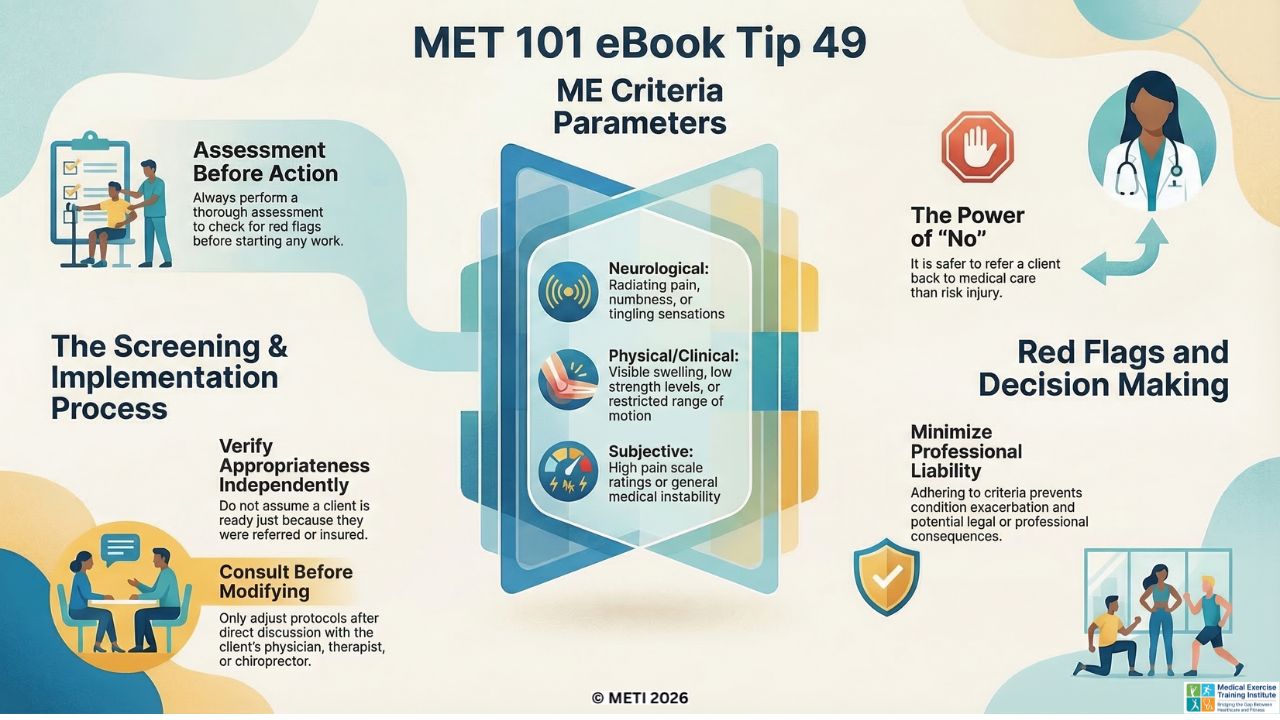
Not Every Client is Ready for Medical Exercise: It is a critical reality that just because a client is referred by a doctor, therapist, or chiropractor—or even if they self-refer because their insurance ran out or they disliked their therapist—it does not automatically mean they are medically appropriate for your services. According to the sources, even licensed physical therapists frequently receive physician referrals for patients who actually need more intensive medical or nursing care to become stable enough to tolerate therapy. As a MedExPRO, you must be equally diligent by performing thorough initial assessments to ensure clients meet the specific parameters for their condition before beginning an ME program.
Identifying the Red Flags: The ME criteria use specific signs and symptoms to determine if a client needs more medical care instead of exercise. When evaluating a client, you must actively look for red flags such as swelling, radiating pain, numbness, tingling, high pain scales, insufficient strength levels, and limited range of motion. If a client presents with these issues, the criteria dictate that the probability of them safely entering the program is minimized, and they should be deferred.
Modifying Protocols and Managing Liability: While the sources note that a MedExPRO can modify a protocol for a specific client, this must only be done after a direct discussion with the client's physician, therapist, or chiropractor. These protocols are purposefully designed to prevent clients from falling through the cracks and to ensure they are safely managed. Ultimately, the ME criteria are put in place to keep you out of trouble and protect you from professional liability. It is far better to tell a client that you cannot work with them and send them back to their doctor than to exercise them, exacerbate their condition, and subsequently have to explain your actions to their medical team, their family, or a court of law.
Ready to build a safer, more professional practice? Download your free copy of the ME 101 eBook today at www.met101ebook.com.
Get Medical Exercise Training guidelines and updates!
Build your practice with tips learned over 28+ years teaching MedXPROs around the world!!